
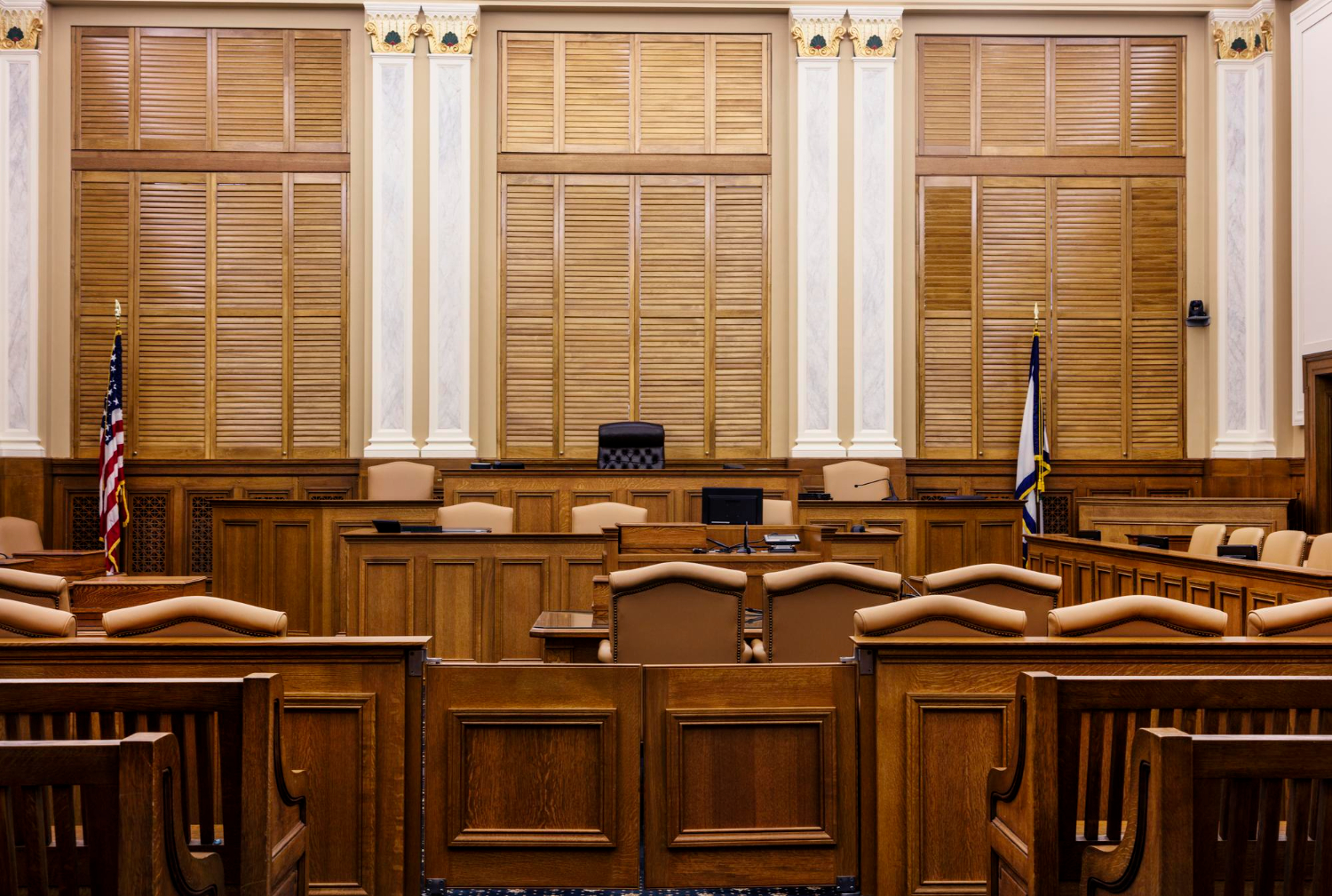
The American criminal justice system is navigating three simultaneous crises in the summer of 2026, and they share a common root: the question of what it means to know something beyond a reasonable doubt when the tools producing evidence, determining sentences, and carrying out the ultimate punishment are all operating under a cloud of verifiable unreliability.
The first crisis is technological
Deepfake videos and AI-generated audio are now routinely appearing in courtrooms, and judges across the country have been unambiguous about the problem: they are not ready. The Federal Rules of Evidence were written for a world where the primary risk was that a witness might lie. They were not written for a world where a video recording — the most viscerally convincing form of evidence known to juries — might be entirely fabricated, indistinguishable from authentic footage without expert analysis that most jurisdictions cannot reliably access or afford.
The second crisis is structural
Algorithms are helping judges decide how long people go to prison, and a decade of independent research has confirmed what civil rights attorneys argued from the beginning: these systems encode the racial and economic biases of the criminal justice data they were trained on, and they apply those biases at scale, with a veneer of mathematical objectivity that makes them harder, not easier, to challenge.
The third crisis is moral
Ohio’s Republican Governor Mike DeWine — a man who spent his career as a prosecutor and a conservative — called for the abolition of the death penalty in June 2026, saying it does not work as a deterrent and cannot be applied fairly. The same week, a New York Times reporter witnessed an execution in a different state go “horribly awry.” Whether the state should have the power to kill its own citizens is being asked again, and this time, the people asking it are not the usual advocates.
These three developments are not unrelated. Each, differently, is a version of the same problem: what the American justice system is prepared to do, and what it can actually justify doing, are increasingly different things.
The Courtroom Deepfake Problem Has Arrived
For years, legal scholars and forensic technology researchers warned that the spread of AI-generated video would eventually compromise the evidentiary foundations of criminal trials. That future arrived while the legal system was still writing its response.
A deepfake filed as evidence in a real case, Mendones vs. [opposing party], was caught only because it used obsolete technology. The National Center for State Courts, which reviewed the case as part of a collaborative effort with CivAI to educate court leaders on AI-related risks, drew a stark conclusion: future fakes will not be so obvious. The judicial system’s de facto legitimacy rests on public confidence that disputes will be resolved based on facts. If litigants believe fabricated evidence can prevail — or that legitimate proof will be wrongly dismissed as AI-generated — that confidence erodes.
The federal rulemaking response has been careful, deliberate, and structurally too slow. The Judicial Conference Advisory Committee on Evidence Rules has proposed changes to Rule 901, which governs the requirements for authenticating evidence before it can be admitted in federal court. Proposed Rule 901(c) would specifically address the problem of AI-generated deepfakes. The Committee also proposed a new Rule 707 that would apply the standards of Rule 702, which governs the admission of expert witness testimony, to AI-generated evidence. These changes are currently going through the rulemaking process and, if approved, would take effect on December 1, 2027.
December 2027. A minimum three-year rulemaking timeline, confirmed by retired federal Judge Paul Grimm, who helped draft one of the proposed amendments, means that for the next eighteen months at minimum, deepfake evidence in federal court will be handled under rules written before generative AI existed — by judges who have told researchers, directly, that they are unprepared. States are acting independently to fill the gap: Louisiana’s Act 250, passed earlier this year, requires attorneys to exercise “reasonable diligence” to determine whether evidence they submit has been generated by AI. California’s Judicial Council was required to review AI’s impact on evidence admissibility by January 2026 and develop rules accordingly. But a patchwork of state-level disclosure obligations is not a substitute for a coherent federal authentication standard.
The deeper problem acknowledged by experts is that even when rules are in place, authentication may not be reliable. With the rapidly improving quality of deepfakes, in the near future, nearly anyone will be able to create convincing false material, and even experts will struggle to accurately identify them, according to legal scholars studying the problem. A video that no expert can definitively identify as fake is, under current rules, admissible. The authentication burden falls on the party challenging it, which means the person with less money to spend on forensic expertise is at a systematic disadvantage.
The Algorithm That Decides How Long You Stay in Prison
The deepfake problem is new. The algorithmic sentencing problem has been documented since 2016, and ten years of mounting evidence have not resolved it.
COMPAS — Correctional Offender Management Profiling for Alternative Sanctions — is a risk assessment tool used in multiple U.S. jurisdictions to generate a recidivism risk score that informs sentencing and parole decisions. A 2016 ProPublica investigation found the tool was almost twice as likely to mislabel Black defendants as high-risk compared to white defendants, sparking a national debate over bias in algorithmic justice and the criminal justice system as a whole. Courts have grappled with these concerns directly. In State v. Loomis (2016), the Wisconsin Supreme Court allowed COMPAS to be used but warned judges not to rely on it exclusively, acknowledging the tool’s potential utility and its serious limitations.
The concern has not been resolved by improved technology. A 2024 Tulane University study found that while AI-assisted sentencing could reduce jail time for some low-risk offenders, minority defendants were still disproportionately flagged as high risk. The problem is not primarily that the algorithms are bad at mathematics. It is that they are trained on historical criminal justice data that itself reflects decades of racially unequal policing, prosecution, and sentencing — and that training on biased inputs produces biased outputs regardless of the sophistication of the model.
AI sentencing tools are often presented as objective, and this creates a dangerous dynamic in issuing court rulings: judges and parole boards may lean too heavily on algorithms instead of exercising their own well-developed judgment. Legal scholars call this “automation bias” — the well-documented human tendency to defer to algorithmic outputs even when those outputs conflict with a contextual judgment that the human reasoner would otherwise apply. The result is a system in which a score generated by a black-box model can effectively determine the trajectory of a person’s life, with limited ability for defendants or their attorneys to examine how the score was calculated or challenge its underlying assumptions.
The transparency gap is the legal system’s most serious unresolved problem with AI sentencing tools. Defendants have a constitutional right to understand the basis on which they are being sentenced. A proprietary algorithm whose internal logic is protected as a trade secret is, by definition, in tension with that right — a tension that courts have so far declined to resolve definitively, while continuing to allow the tools to be used.
Ohio and the Moral Reckoning: Capital Punishment Cannot Escape
On June 16, 2026, Republican Governor Mike DeWine told the Associated Press that he wants Ohio to abolish the death penalty, describing it as neither an effective deterrent nor a justly applicable punishment. It was a statement of significant political weight: DeWine is a lifelong conservative who spent decades as a prosecutor, and Ohio has 109 people currently sitting on death row under a de facto moratorium that has now stretched for eight years — the state has not executed anyone since July 2018, because it cannot obtain the drugs required for lethal injection and has declined to adopt alternative methods.
Twelve people have been sentenced to death in Ohio and then later declared innocent. The state’s attorney general released a report in April calling the ongoing execution moratorium a “mockery of the justice system” — but the report could not resolve the underlying problem, which is that Ohio’s capital punishment framework remains legally intact while being practically inoperable, a state of suspended animation that satisfies nobody. 56% of Ohio voters now say the state should abolish the death penalty and replace it with a life sentence without the possibility of parole — a majority position, in a state that elected the governor now calling for exactly that outcome.
The national picture mirrors Ohio’s ambivalence on a larger scale. Mississippi, at the suggestion of the Trump administration, enacted a new capital sexual battery law in May 2026, openly defying Supreme Court precedent that limited the death penalty to homicide cases. A New York Times reporter’s firsthand account of a botched execution in June — published under the headline “For 90 Minutes, I Watched an Execution Go Horribly Awry” — produced the kind of visceral public reaction that execution debates rarely generate. The Death Penalty Information Center documented that bipartisan support defeated Indiana’s House bill to add the firing squad as an execution method earlier this year, even as other states were moving in the opposite direction.
The death penalty debate of 2026 is unusual in its bipartisan character. Opposition is no longer reliably partisan: conservative governors citing cost and deterrence evidence, Republican state senators sponsoring abolition bills, and law enforcement veterans pointing to wrongful conviction rates are sharing platforms with civil liberties advocates making constitutional arguments. The argument that has proved most persuasive across partisan lines is the simplest one: advocates say Ohio “can’t ignore” the ratio of executed to exonerated death row inmates. In a justice system increasingly uncertain about the reliability of the evidence it is built on, the irreversibility of execution is its most indefensible feature.
The System the Evidence Demands
What connects deepfake evidence, algorithmic sentencing, and the death penalty debate is not a policy agenda. It is an epistemological problem: the criminal justice system makes consequential, often irreversible decisions based on evidence and risk assessments whose reliability is, in each of these domains, now formally in question.
A jury that cannot distinguish a fabricated video from a real one cannot convict with confidence. A sentencing judge whose algorithmic tool is twice as likely to flag Black defendants as high-risk is not applying equal justice under the law. And a state that has executed twelve people, who were later declared innocent, is doing something that no level of procedural care can fully justify if the underlying evidence chain is as fragile as 2026’s legal landscape reveals it to be.
These are not arguments against accountability, or for leniency as a default. They are arguments for a system willing to audit what it knows, what its tools can reliably do, and what it is justified in wielding with power that cannot be undone. That audit, in American criminal justice, is long overdue — and the pressures of 2026 are forcing it into public view, whether the system is ready or not.
Sources: National Center for State Courts / CivAI, “AI-Generated Evidence Is a Threat to Public Trust in the Courts” (February 2026); Purdue Global Law School, “Federal Rules of Evidence & AI-Generated Materials” (April 2026); Quinn Emanuel, “Adapting the Rules of Evidence for the Age of AI” (November 2025); Forbes / Lars Daniel, “Deepfakes Are Entering U.S. Courtrooms — Judges Say They’re ‘Not Ready’” (December 2025); Rev.com, “AI Sentencing Ethics: Balancing Justice and Innovation” (October 2025); ProPublica, “Machine Bias” (2016); Tulane University, AI Sentencing Bias Study (2024); Death Penalty Information Center, Two Reports from Ohio (April 2026); ACLU of Ohio, New Data on Death Penalty Poll (December 2025); LegalClarity, “Death Penalty in Ohio: Crimes, Sentencing, and Moratorium” (May 2026); NACDL Daily Criminal Justice Briefing, June 2026; Associated Press, “Republican Gov. Mike DeWine Wants Ohio to Abolish the Death Penalty” (June 16, 2026).