
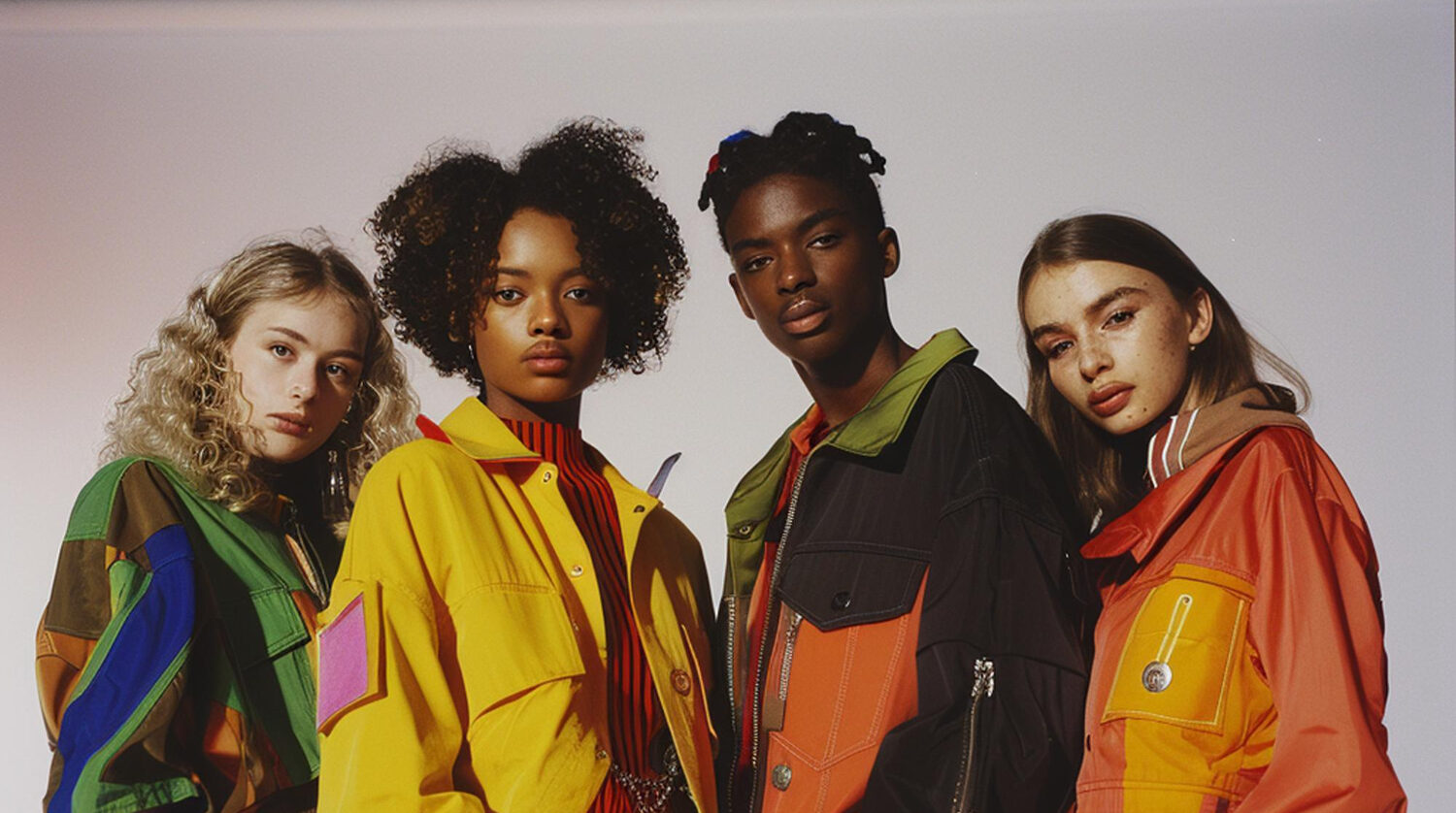
The word that fashion executives used most often to describe their industry in 2026 was not “exciting,” “transformative,” or even “uncertain.” It was “challenging.” That single word, drawn from the annual Business of Fashion–McKinsey State of Fashion Executive Survey, carries a weight that the industry’s carefully managed aesthetic output rarely lets show — because what it describes, plainly, is a sector in the middle of a structural reckoning it can no longer avoid.
The BoF-McKinsey report bluntly describes the fact that between 2023 and 2025, around 80% of luxury market growth stemmed from price increases rather than volume gains as a lever that “cannot be relied on indefinitely.” Outsourcing scandals, quality issues, and a growing perception that premium prices no longer correspond to premium products have eroded the trust that luxury brands spent decades building. The post-pandemic revenge spending boom has run its course. And the consumer standing on the other side of all this — better informed, more value-conscious, and increasingly suspicious of greenwashing claims and AI-generated marketing language — is demanding something the industry has not consistently delivered: proof.
In fashion and beauty in 2026, the reckoning with authenticity goes deeper than brand positioning. It is reshaping aesthetics, business models, regulatory frameworks, and the tools designers use to create in the first place.
Further Reading: The End of Taking Brands at Their Word: Inside the Quiet Revolution Reshaping Sustainable Shopping
The Luxury Trust Reckoning
Hermès remains the industry’s undisputed benchmark for resilience in 2026. While LVMH and Kering faced revenue dips in 2025, Hermès achieved a 10% increase in sales at constant exchange rates — doing it without aggressive price hikes, without outsourcing scandals, and diluting the artisanal scarcity model that defines its brand identity. The Hermès playbook — deliberate constraint, artisanal excellence, cultural legitimacy rather than visibility — has become the most studied model in luxury strategy precisely because it looks so different from what the rest of the sector has been doing.
The rest of the sector has been raising prices in the absence of quality improvements. That strategy worked in the post-pandemic environment, where demand temporarily exceeded even the inflated price points. It has stopped working. The luxury consumer of 2026 is not simply budget-constrained. They are specifically, articulately skeptical of value propositions that feel hollow — and they have the social media infrastructure to communicate that skepticism at scale.
The industry’s response has been a visible pivot toward what McKinsey and Euromonitor both call “affordable luxury gaining traction” — mid-market and premium brands adjusting their assortments to include more high-value products with fewer promotions, and luxury brands re-investing in craftsmanship visibility, supply chain transparency, and creative storytelling that justifies a price without simply asserting it. Burberry’s Autumn 2026 “Escape to the Countryside” campaign — shot at Deene Park in Northamptonshire with Moses Martin’s own band providing the soundtrack — illustrates the approach: heritage, texture, and specific place, rather than the aspirational abstraction that characterized luxury marketing in an earlier era.
Euromonitor’s 2026 consumer survey found that how you live, not what you own, increasingly defines status, and this reflects the broader market shift. Experiences — travel, wellness, cultural immersion — dominate consumer priorities. The implication for fashion is structural: a garment competes not just with other garments but with a dinner, a trip, a concert. The brands winning that competition are the ones that are a part of the experience, rather than accessories to it.
AI in the Studio, the Supply Chain, and the Store
The global AI in fashion market is valued at approximately $2.47 billion in 2026 and projected to reach $9.45 billion by 2030, growing at a compound annual rate of nearly 40%. McKinsey estimates generative AI alone could add between $150 billion and $275 billion to operating profits across apparel, fashion, and luxury over the next three to five years. More than 35% of fashion executives report that they already use generative AI in daily operations and rank it as the single biggest opportunity facing the industry.
The applications reshaping operations most significantly are not in the glamorous end of the business. They are in demand forecasting and inventory management — the unglamorous infrastructure that determines whether a brand overproduces by 30% or 8%. Traditional forecasting relied on historical sales data and buyer intuition. AI systems now process real-time inputs from social media signals, search trends, weather data, and regional sales patterns to generate granular demand predictions that allow brands to produce closer to actual demand. One brand that implemented AI demand forecasting reduced overproduction from over 30% to 8% — a margin improvement that simultaneously became a credible sustainability story.
At the consumer-facing end, agentic AI is rewriting the discovery and purchase experience. Rather than passively surfacing recommendations, agentic retail systems can now complete transactions on behalf of shoppers. OpenAI and Google have integrated shopping directly into AI interfaces, creating what Vogue’s January 2026 analysis called “a discovery, search and commerce layer” for fashion. Generative Engine Optimization is the rival to traditional SEO as a brand visibility strategy: the question is no longer just where you rank on a search results page, but whether an AI shopping agent can find, contextualize, and recommend your product when a consumer is searching conversationally.
Smart eyewear with multimodal AI — functioning simultaneously as an AI assistant, camera, and social interface — is emerging as the wearable category most likely to reshape fashion’s relationship with technology. Analysts project the category will exceed $30 billion by 2030, and major companies have already scheduled product launches throughout the year. The aesthetic implications of how fashion is worn, photographed, and consumed are only beginning to be thought through.
Beauty’s Exhaustion Aesthetic: The Runway Told You to Stop Trying So Hard
While luxury recalibrates its value proposition and AI rewires retail infrastructure, the most visible aesthetic shift of 2026 is playing out on faces and runways — and it is, in its own way, a rejection of the same polish and performance that the luxury trust reckoning is rejecting in a different domain.
The fall/winter 2026 New York Fashion Week runways delivered a consistent aesthetic signal: imperfection is in. Smudgy, just-smooched lips appeared at Boy London and Altuzarra. Coach’s lead hairstylist, Guido Palau, let models’ hair run freely, leaving light crimps and frizz untouched. Collina Strada embraced what ELLE editors described as “bed hair.” The muse for this season, as the coverage consistently put it, does not mind a little dishevelment — she air-dries instead of reaching for the Dyson, leaves her eyeliner slightly shaky, and embraces imperfection if it means getting out the door faster.
This is not simply a seasonal trend. It connects to a broader fatigue with the hyper-curated, filter-heavy, maximally produced aesthetic that social media — and the AI tools accelerating content production — has normalized. When everything is polished, imperfection becomes the signal of authenticity. When every brand is producing AI-generated imagery of impossible skin and perfect color, the smudged lip and the air-dried wave become the thing that feels real.
The maximalist jewelry revival — brooches, bold statement pieces, layerable fine jewelry — runs alongside the effortless beauty aesthetic rather than contradicting it. Jewelry is the fashion category outperforming all others in 2026, having defied the broader luxury slowdown by offering long-lasting investment value, self-expression, and self-gifting appeal that clothing has struggled to match. A well-chosen brooch on an otherwise effortless outfit is precisely the combination the season is rewarding: personality through a single intentional piece, rather than through the labor of full assembly.
Resale, Repair, and the Regulatory Push
The secondhand fashion market continues its structural expansion, growing two to three times faster than the first-hand market between 2025 and 2027. The drivers are primarily economic — value-consciousness under cost-of-living pressure, but they are also regulatory.
The EU’s Digital Product Passport and Green Claims Directive are arriving together to force brands to prove what they have been claiming about sustainability for years. Textile manufacturers face Digital Product Passport requirements, with enforcement beginning in 2027, mandating scannable records documenting material composition, carbon footprint, and recyclability at the individual product level. For resale platforms and repair services, this represents an opportunity: provenance data embedded in a garment’s digital record makes resale authentication faster, more reliable, and more trustworthy.
Rental, repair, and fractional ownership models are gaining commercial traction across both luxury and mid-market segments, driven by consumers who increasingly prioritize quality over quantity and show a stated intention to buy less but better. The phrase that appears most consistently across 2026 consumer research — “buy less, buy better” — captures a consumer sentiment that the industry has heard before but is only now being forced, by a combination of regulatory pressure and genuine market signal, to take structurally seriously.
What 2026’s Fashion Moment Actually Means
The threads running through fashion and beauty in July 2026 are more coherent than they might initially appear. The luxury trust reckoning, the AI efficiency push, the exhaustion aesthetic, and the resale regulatory moment are all, at their root, responses to the same underlying dynamic: a consumer who has become more discerning, more sceptical, and more willing to redirect spending toward things that feel genuinely worth it.
The brands navigating this moment most successfully — Hermès in luxury, the independent labels whose runway imperfection is aspirational rather than accidental, the retailers whose AI implementation is improving inventory accuracy rather than generating hollow content — share a common thread: they are competing on substance rather than surface, on cultural legitimacy rather than marketing volume, on the quality and authenticity that 2026’s consumer has become genuinely expert at detecting.
Fashion has always been the performance of identity. What is new in 2026 is that the audience has stopped believing the costumes.
Further Reading: Too Many Books, Not Enough Readers: Inside Publishing’s Discoverability Crisis
Sources: McKinsey: The State of Fashion 2026 | Business of Fashion: Luxury Fashion Is Rethinking Its Value | Euromonitor: Luxury and Fashion 2026 | Lectra: 5 Key Trends Redefining Fashion in 2026 | FashionINSTA: Artificial Intelligence in Fashion 2026 | ELLE: The Biggest Beauty Trends of 2026 | The Independent: The Biggest Fashion Trends for 2026 | Savoir Flair: Top Fashion and Beauty News July 2026