
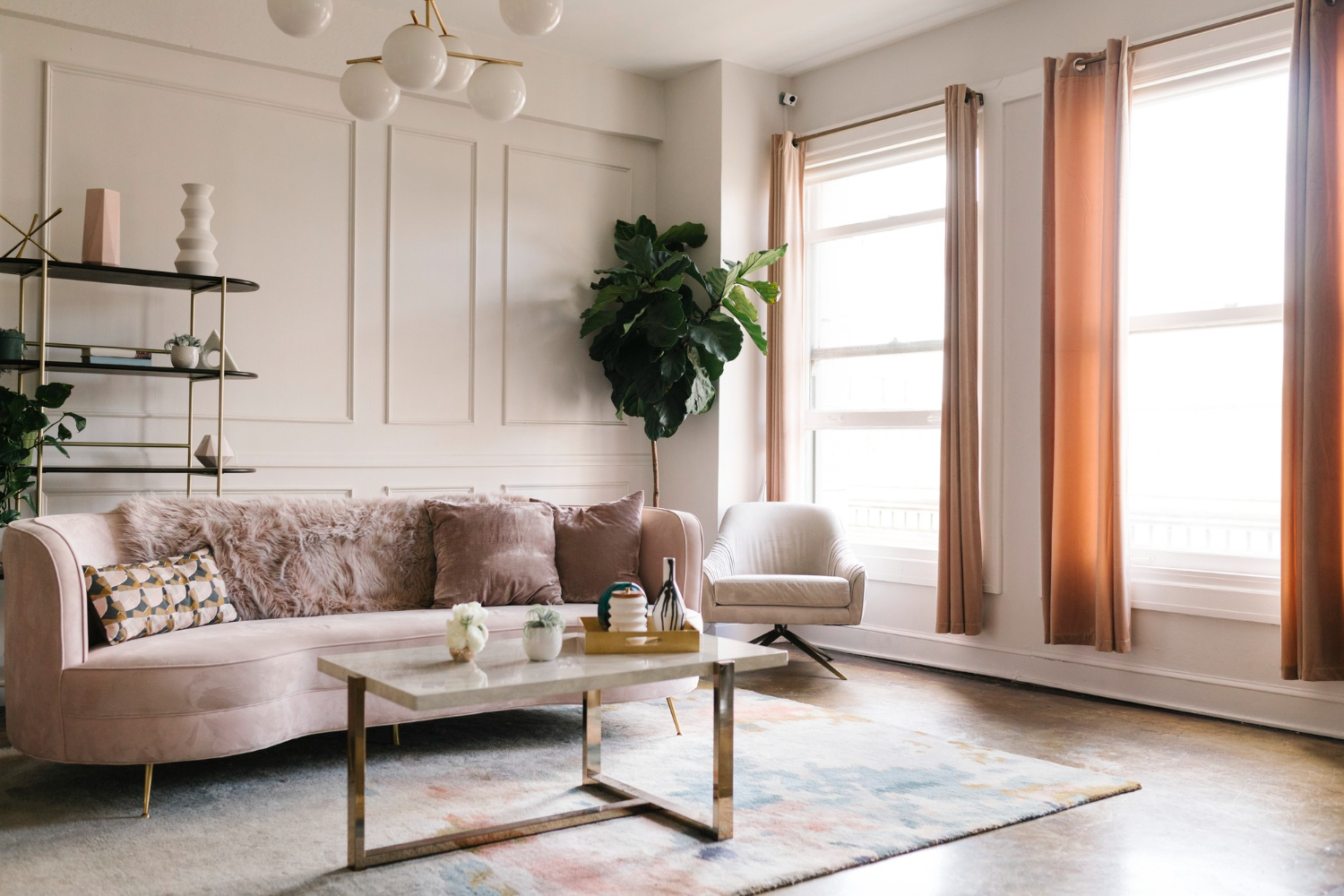
Something shifted in the way people think about their homes over the past two years, and the interior design world has finally caught up to it. After nearly a decade of minimalism as the dominant visual language of the aspirational interior — white walls, clean lines, deliberate emptiness, the aesthetics of a well-staged Airbnb — designers across the country are reporting a decisive turn in the other direction.
The biggest shift shaping homes in 2026 is not a particular color, material, or style. It is a philosophy. Homes are becoming warmer, more layered, and increasingly expressive of the people who actually live in them, with tactile materials, natural finishes, and meaningful pieces taking precedence over fast-moving micro-trends. As Homes and Gardens summarized the movement this spring: “The biggest homes in 2026 won’t be the most minimalist, but the most personal, comforting, and full of soul.”
That reorientation — from curation to character, from perfection to personality — is running through every major design trend of the year, and it is producing interiors that look radically different from the neutral-and-quartz aesthetic that preceded them.
Further Reading: The Great Fashion Reset: Why 2026 Is the Year the Industry Had to Stop Faking It
Maximalism With Intention: The Collected Look
The return of maximalism has been predicted for several years without quite materializing at scale. In 2026, it has arrived — but in a form that is more considered than its predecessors. The maximalism of 2026 is not the cluttered eclecticism of the 1980s or the layered boho of the early 2010s. It is what Veranda and its contributing designers are calling “unapologetic, fearless design” — saturated color palettes, gallery-worthy furniture, hand-dyed textiles, and a celebration of the specific objects that carry personal meaning, travel memories, and genuine history.
The distinction that matters is between maximalism as accumulation and maximalism as curation in depth. The homes that are executing this trend most successfully are not simply filling space with more things. They are adding layers of texture, material, and story that make a room feel settled and inhabited rather than assembled and performed. Decorilla’s editorial team, writing in August, described the operative buzzword as “irregularity” — surfaces that are rougher and less uniform, finishes that look deliberately uneven, and pieces that look better the longer you live with them.
Pinterest’s trend forecasting data, based on an analysis of 600 million monthly users, captures the speed of this shift: trends are evolving more than four times faster than they did seven years ago, which means the consumer appetite for self-expression and identity curation in the home has accelerated beyond what traditional interior design calendars anticipated. The platform’s most striking data point for 2026 home searches is the 130% jump in searches for “circus interior” — bold stripes, sculptural silhouettes, deliberate theatricality — and an 80% surge in “alien core aesthetic,” reflecting a Gen Z and millennial interest in holographic accents and iridescent accessories that would have read as costume in any previous decade.
These two impulses — the deeply traditional collected look and the maximally expressive futurist aesthetic — are less contradictory than they appear. Both represent a rejection of the neutral, the safe, and the interchangeable. Both prioritize rooms that announce something specific about the person living in them.
Natural Stone: The New Statement Material
The single material category most consistently named by designers across every major outlet this year is natural stone — and specifically, the shift from engineered quartz to authentic, veined, dramatically patterned stone in applications that would previously have defaulted to a more neutral surface.
“Dramatic natural stone is the biggest kitchen countertop trend in 2026,” Laura Williams of Living Oak Interior Design told Homes and Gardens. “We are no longer seeing simple quartz stones on countertops or in other applications; installing beautiful viola marble or emerald quartzite is the future. Bring on the colorful drama.”
The driver behind this shift is the same anti-ersatz impulse running through maximalism more broadly. Engineered quartz was the rational choice when consistent pattern, low maintenance, and cost efficiency were the primary criteria. It remains a functional material — but it is no longer the aspirational one. The appeal of natural stone in 2026 is precisely that it cannot be perfectly reproduced: each slab is unique, its veining and variation a direct product of geological time rather than the manufacturing process. In a design environment saturated with AI-generated imagery, algorithm-optimized spaces, and mass-produced “handcrafted” objects, the irreproducibility of natural stone is read as genuine rather than performed.
This logic extends beyond countertops. Designers are specifying stone in tables, decorative accessories, mirrors, and built-in cabinetry — wherever a surface can carry the visual weight of a dramatic, one-of-a-kind material. The color palette has shifted alongside the material itself: deep greens, burgundies, and the complex grays of aged limestone are replacing the light, consistent tones that the quartz era favored.
Wood Tones: The New Mixing Rules
The design community formally abandoned the rule that all wood tones in a room should match — a principle that governed conventional interior design advice for decades — in 2026. Mixing wood tones is now not only acceptable but actively desirable, a visible signal of the collected-over-time aesthetic that defines the year’s broader sensibility.
Woodgrain’s 2026 trend analysis identifies this as one of the year’s most defining practical shifts: homeowners are moving toward layered, expressive interiors that feel warm, collected, and full of character by combining different grains, finishes, and tones in the same space. A walnut dining table with oak floors and painted millwork accents is no longer a sign of an incomplete project. It is a deliberate choice that reads as lived-in and intentional.
The related movement toward architectural millwork — classical moldings, detailed cabinetry, built-in shelving with historical silhouettes updated in contemporary finishes — reflects what Woodgrain calls “Modern Heritage”: a design movement that bridges past and present by combining timeless architectural detail with modern materials and updated color palettes. It produces spaces that feel rooted rather than trend-dependent, which is increasingly what buyers and homeowners are seeking as material costs continue to climb and the appetite for disposable furniture declines.
Textiles as the Lead, Not the Supporting Cast
In previous design cycles, textiles played a supporting role — the throw pillow, the area rug, the curtain that finished the room. In 2026, they are the room. Veranda’s trend report, based on interviews with leading designers, describes textiles as “no longer the side characters in design — they are the headliners in every room.” The bouclé and neutral-fabric vocabulary of recent years is giving way to sumptuous, saturated, and tactile choices: velvets, hand-dyed linens, chunky woven textiles in deep jewel tones, and embroidered upholstery that rewards close inspection.
The wellness-driven impulse that has been reshaping how people approach luxury travel and hospitality is playing out at home as well. Spaces are being designed around sensory experience — the weight of a substantial curtain, the grain of an unfinished linen, the difference between synthetic and natural fiber underfoot. Ergonomics, long an afterthought in residential design, are getting serious attention: seating that is designed to be genuinely comfortable rather than primarily photogenic, lighting that adjusts to human circadian rhythms rather than static task requirements, and acoustic considerations that were previously confined to home theater design.
HomeGoods designers name “Modern Equestrian Elegance” as one of the year’s defining residential aesthetics: rich leather seating, plaid textiles, dark wood pieces, brass hardware, and saddle-inspired forms that bring the warmth of a countryside library into an urban apartment without literal horse imagery. The adjacency to British country house style, updated for contemporary urban proportions, is deliberate — it is the same heritage-and-craft appetite that is driving the natural stone and millwork trends, in a softer and more approachable register.
Color: The New Neutrals Are Not Neutral
The paint color story of 2026 is, at its simplest, that the greige era is over. The “new neutrals” being specified by designers are colors with genuine undertone depth — warm ochres, dusty terracotta, deep sage greens, faded burgundies, and the complex off-whites that sit closer to linen or raw clay than to the bright optical whites of recent years.
Good Housekeeping’s designer roundup specifically names terracotta tiles as one of the year’s most anticipated elements, a return of a material that carries enough historical and geographic association — Tuscan kitchens, Moroccan courtyards, Mexican haciendas — to function as a narrative element rather than merely a floor choice. Statement mirrors, decorative flooring with pattern and personality, and botanical wallpaper in large-scale prints round out a year in which surface treatment is doing significant expressive work.
The color-drenching technique — painting walls, trim, ceiling, and built-ins all in the same deep hue to create an enveloping, jewel-box effect — has moved from an editorial trend confined to magazine shoots to a genuinely popular choice in residential projects. Designers report that clients who were resistant to the idea in the planning phases consistently respond to completed rooms with something approaching relief: the enveloping color delivers a sense of warmth and enclosure that white-walled rooms, no matter how thoughtfully furnished, cannot replicate.
The Sustainability Subtext
Running through virtually every 2026 interior design trend is a sustainability dimension that is less loudly performed than in previous years — less about certified materials and more about durability, craft, and the resistance to disposability.
Decorilla’s analysis captures this directly: material costs keep climbing, and people are done with disposable furniture. The “eco-chic” aesthetic of the early 2020s leaned on mass production with sustainable credentials attached; the 2026 version obsesses over one-off pieces with traceable origins and hyper-local craft, makers who use both hand tools and CNC machines to turn offcuts and salvaged wood into furniture built to last. The collected-over-time aesthetic that defines the year’s interiors is, at its root, an argument against the replace-it-next-season relationship with the home that fast furniture retail cultivated over the previous two decades.
A room full of things that were chosen slowly, maintained carefully, and expected to outlast the trend cycle is both aesthetically and environmentally distinct from one assembled around a single coherent look from a single source in a single season. In 2026, the former is what the most attentive part of the market is building toward.
Further Reading: The End of Taking Brands at Their Word: Inside the Quiet Revolution Reshaping Sustainable Shopping
External Sources: Homes and Gardens: The 20 Chicest Interior Design Trends of 2026 (June 10, 2026) | Woodgrain: Top 10 Interior Trends of 2026 | Decorilla: 16 Interior Design Trends 2026 (August 2026) | Veranda: Designers Predict a Fearless New Era for Interiors in 2026 | Good Housekeeping: The Biggest Interior Design Trends for 2026 | HomeGoods: Designers Reveal the Biggest Decor Trends for 2026 | House Beautiful via Hearst: The 2026 Home and Design Trend Report | Pinterest Predicts 2026 Trend Report — Home Design Highlights