
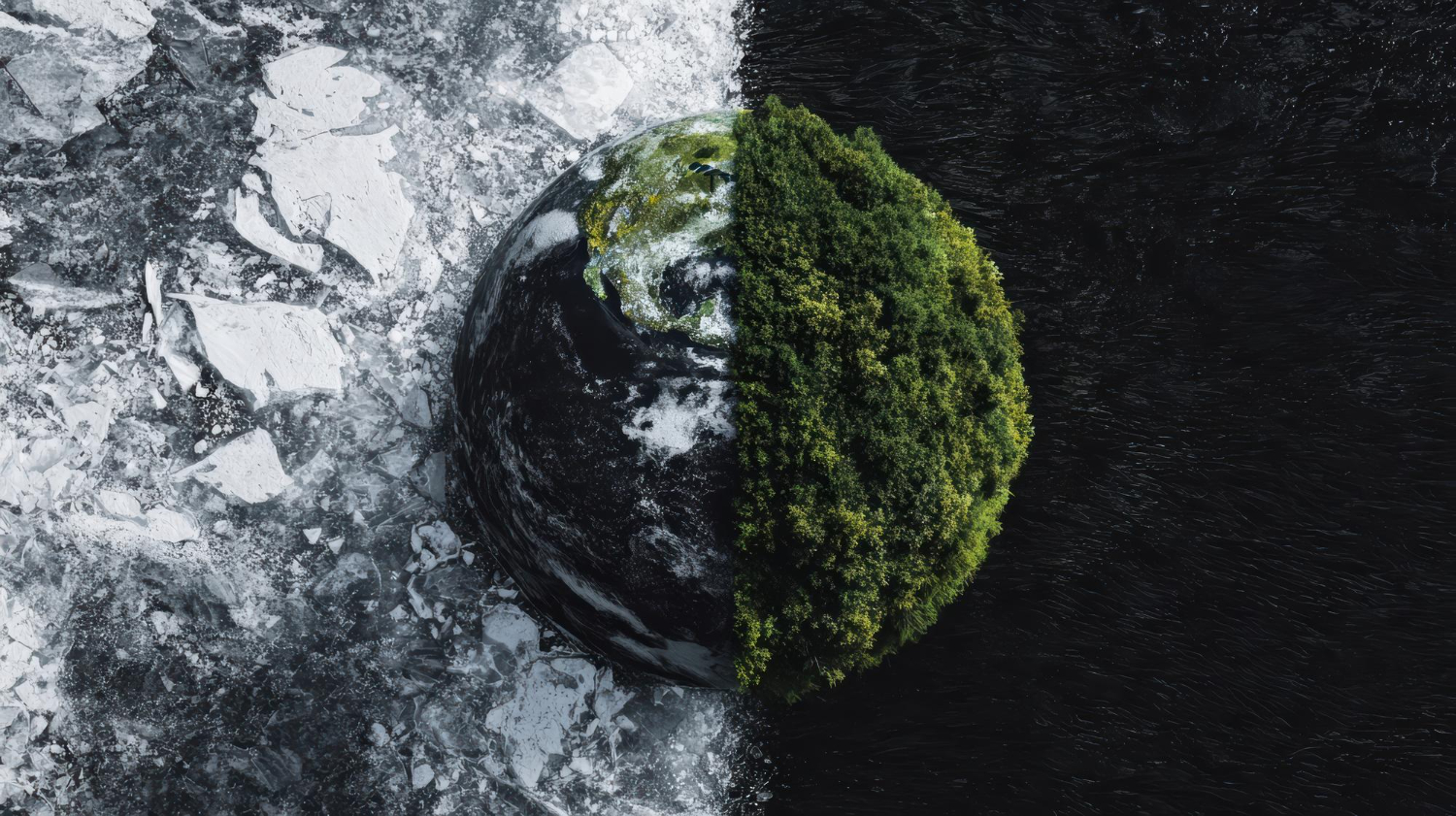
On October 1, a research team led by Matthias Huss, director of Switzerland’s glacier monitoring network GLAMOS, published findings that stopped several climate scientists mid-sentence. Swiss glaciers lost 5.5% of their ice volume in 2026 — the second-largest annual percentage loss ever recorded, nearly matching the catastrophic 6% record set in 2022. Between July and September alone, the glaciers shed approximately 2.2 trillion liters of water. That is over four times the annual drinking water consumption of every household in Switzerland.
Huss described 2026 as “a catastrophic year.” The Swiss Academy of Sciences, which co-published the report, stated that Alpine glaciers “have no chance of surviving in the long term under such conditions.” The Aletsch — the largest glacier in the Alps — recorded its worst melt on record this year. At some glacier tongues, scientists measured ice losses of up to ten meters in depth across a single summer. At 3,500 meters above sea level, there was no snow remaining at the end of summer.
Over the past five years, Swiss glaciers have lost almost 20% of their total volume — shedding as much ice between 2021 and 2026 as they did across the entire thirty years from 1960 to 1990. “There will probably be no ice in ten or maybe fifteen years,” Huss said. The timeline, delivered by the scientist who has spent his career measuring these glaciers, is not a projection from a worst-case model. It is an observation from the field.
This is what the first week of October 2026 has delivered to the climate science record. It is worth paying close attention to, because the week’s data is not limited to Switzerland.
Further Reading: The End of Taking Brands at Their Word: Inside the Quiet Revolution Reshaping Sustainable Shopping
Three Records, One Trajectory
The Swiss glacier data arrived alongside two other findings that, taken together, establish October 2026 as one of the more densely documented weeks of climate deterioration since systematic observation began.
Antarctic sea ice recorded its third-smallest winter peak extent since satellite records began 48 years ago. The finding, covered by AP and Inside Climate News on October 2, extends a pattern of anomalously low Antarctic sea ice that researchers have been documenting with growing alarm since the record-shattering minimums of 2023 and 2024. The Southern Ocean’s ice extent shapes ocean circulation patterns, marine ecosystem dynamics, and the rate at which warm water reaches the base of Antarctic ice sheets — all of which connect, in complex but measurable ways, to global sea level projections over the coming century.
Simultaneously, the Skeptical Science weekly climate research roundup for October 4 flagged multiple analyzes documenting the impacts of what researchers are calling this year’s “record-shattering El Niño.” An El Niño event was anticipated heading into 2026; the scale of what materialized has, according to multiple published analyzes, exceeded the projections that informed adaptation planning across the Pacific, South Asia, and sub-Saharan Africa. The World Meteorological Organization’s Global Annual to Decadal Climate Update had warned that global temperatures were likely to stay at or near record levels from 2025 to 2029, escalating risks for economies and societies. The October data suggest the forecast is tracking at the end of its uncertainty range.
The three findings — glacier loss, sea ice minimum, and El Niño impacts — are not independent events. They are expressions of the same underlying physical reality: the global mean surface temperature has been elevated above pre-industrial baselines for long enough, at a sufficient magnitude, that the consequences are now appearing simultaneously across the cryosphere, the ocean system, and the atmospheric circulation patterns that govern weather at regional scales.
What Vanishing Glaciers Actually Cost
The scientific framing of glacier loss in terms of ice volume and percentage declines is precise and important. But for the hundreds of millions of people whose water security depends directly on alpine glacial systems, the stakes are better captured in different terms.
Glaciers function as natural reservoirs, storing winter precipitation as ice and releasing it gradually through summer melt. That melt is the primary water source for irrigated agriculture, municipal water systems, and hydropower generation across large swaths of Central Asia, South Asia, the Andes, and the European Alps. As glaciers shrink, the melt cycle becomes more erratic — initially producing more water than normal as ice mass declines rapidly, then producing progressively less as the ice reserves approach exhaustion. The transition from the first phase to the second is what hydrologists call “peak water,” and several major glacial systems are now approaching or passing that threshold.
In Switzerland specifically, Huss has linked the glacier monitoring findings directly to food supply chains and transportation infrastructure. The Rhine, which flows from the Swiss Alps through Germany and the Netherlands to the North Sea, reached record low levels this summer — a consequence of reduced glacial meltwater input that directly affected river freight, industrial cooling systems, and agricultural irrigation across three countries. Newscord’s coverage of the GLAMOS report noted that ten of eleven major outlets covering the story skipped the Rhine navigation risk entirely, focusing on the headline ice loss number while underreporting the downstream infrastructure consequences that most directly affect economic activity.
That gap between the scientific finding and its economic implication is one of the most persistent communication failures in climate reporting — and it matters for how societies prioritize adaptation investment. The question is not only whether glaciers will survive, though that is a profound ecological and cultural loss. It is whether the water infrastructure of densely populated, economically significant regions can be redesigned fast enough to compensate for a storage system that took millennia to build and is being depleted across a single human lifetime.
The Science Governance Crisis Running Beneath the Data
The October climate data arrives in a policy environment defined by the United States’ withdrawal from the Intergovernmental Panel on Climate Change — the body responsible for synthesizing global climate science into the assessment reports that inform international negotiations and national adaptation planning.
The United Nations University’s 2026 climate watch analysis, published at the start of the year, described the US withdrawal from the IPCC and the Intergovernmental Science-Policy Platform on Biodiversity and Ecosystem Services as “a significant setback for international scientific collaboration.” These institutions, as the UNU framed it, “serve as the cornerstone of global efforts to assess the evidence on the drivers, risks and solutions associated with the interconnected climate and biodiversity crises.”
The practical consequence of the withdrawal is not primarily about the science itself — the data that GLAMOS collected in Switzerland, the satellite observations of Antarctic sea ice extent, and the ocean temperature records driving the El Niño analysis continue to be produced and published regardless of which governments fund the synthesis process. The consequence is about the institutional legitimacy of the conclusions drawn from that data in policy settings. When the largest historical emitter and the largest economy in the world withdraw from the body whose findings are supposed to inform global action, the political weight behind those findings is diminished in ways that are difficult to quantify but straightforward to observe in negotiating dynamics.
COP31, the United Nations Climate Change Conference, opens in Turkey on November 9, six weeks from now. The conference will take place against a backdrop defined by the record-shattering El Niño impacts, the Swiss glacier data, the Antarctic sea ice findings, and the ongoing implementation challenges around the $1.3 trillion climate finance goal for developing nations that was agreed at COP30. Climate Change News described the October political calendar — including a pre-COP meeting in Fiji focused specifically on Pacific ocean protection, the IPCC’s AR7 timeline negotiations in Addis Ababa, and the UN Biodiversity Conference in Yerevan — as setting the stage for negotiations that will need to reconcile the widening gap between the physical urgency of the October data and the political constraints of the November conference.
Turkey, the COP31 host, has faced criticism from environmental NGOs over the proposed expansion of a coal-fired power station. The juxtaposition — a country hosting a conference nominally committed to fossil fuel phase-out while planning to expand coal capacity — is not unique to Turkey in 2026, but it illustrates the structural contradiction that has defined climate negotiations for three decades and shows no sign of resolving at COP31.
The Hydrogen Signal and What It Might Mean
Set against the week’s documentation of climate deterioration, one finding from the ScienceDaily climate news feed on October 4 merits mention in a different register. Researchers announced a new light-activated material capable of efficiently producing hydrogen from water without requiring an expensive metal catalyst, with a sulfur-based chemistry that could point toward cheaper and more practical pathways for clean hydrogen production.
The finding is early stage and not yet ready for commercial deployment. But it lands in a week when the distance between the physical reality documented by glacier scientists and the technological trajectory needed to close it feels particularly wide, and it is a reminder that the solutions side of the climate equation is also producing results — incrementally, imperfectly, and without the certainty that the physics of ice loss delivers. Clean hydrogen is one of the more genuinely contested territories in the energy transition debate: proponents see it as essential for decarbonizing hard-to-abate sectors including steel, shipping, and aviation; critics point to the energy losses in production and distribution that make it a less efficient pathway than direct electrification in most applications.
Not contested is the scale of the challenge that the October data has clarified. The GLAMOS report’s conclusion — that Alpine glaciers have no chance of surviving in the long term under current conditions — is a statement from the scientists who have spent the most time in the field, measuring the reality that models describe in probabilistic terms. Matthias Huss returned from this summer’s monitoring work and found glaciers that had been ice-covered his entire career now exposed as bare rock. “It’s a moon landscape,” he said, “that is dry and dead.”
That description is not a worst-case projection. It is a field observation, delivered in October 2026, about what has already happened.
What Comes Next — and Who Is Watching
The five weeks between now and COP31 will determine whether the October data is integrated into the political conversation at the scale it warrants, or whether it joins the growing archive of climate findings that produce accurate headlines and insufficient policy responses. Columbia University’s Lamont-Doherty Earth Observatory is hosting a public open house on October 17, including sessions specifically on El Niño preparedness and the science of what has been an exceptional climate year. The IPCC’s AR7 working group timeline is being negotiated in Addis Ababa this week, with whether the United States’ withdrawal creates procedural complications for a report that is supposed to reflect the full weight of global scientific consensus.
As the global water crisis documented across major river basins this year demonstrates, the downstream consequences of cryosphere loss are already operational rather than theoretical — in the Rhine’s navigation depths, in the Indus basin’s geopolitical tensions, in the agricultural calendars of every region that depends on predictable snowmelt timing for irrigation scheduling. The Swiss glacier data published this week is the most precisely measured and most immediately legible piece of that larger story. Its clarity should be an advantage. Whether it is treated as one depends on decisions being made in Addis Ababa, in Yerevan, and in Istanbul — right now.
Further Reading: The Space Economy Just Went Mainstream—And Nothing Will Be the Same
External Sources: Reuters: Swiss Glaciers Lose More Than 5% of Ice After Record Heatwave (October 1, 2026) | NPR: Swiss Glaciers Suffer Another Year of Record Ice Loss (September 30, 2026) | CGTN: Report — Swiss Glaciers Lose More Than 5% of Ice After Record Heatwave (October 1, 2026) | Skeptical Science: 2026 SkS Weekly Climate Change & Global Warming News Roundup #40 (October 4, 2026) | Climate Change News: What’s on the Climate Calendar for October 2026? (October 1, 2026) | UNU-EHS: 5 Things to Watch in Climate and Environment in 2026 | ScienceDaily: Scientists Just Found a New Way to Make Hydrogen From Water (October 4, 2026) | Wikipedia: 2026 United Nations Climate Change Conference (COP31) | Columbia University Lamont-Doherty Earth Observatory: Climate Events October 2026