
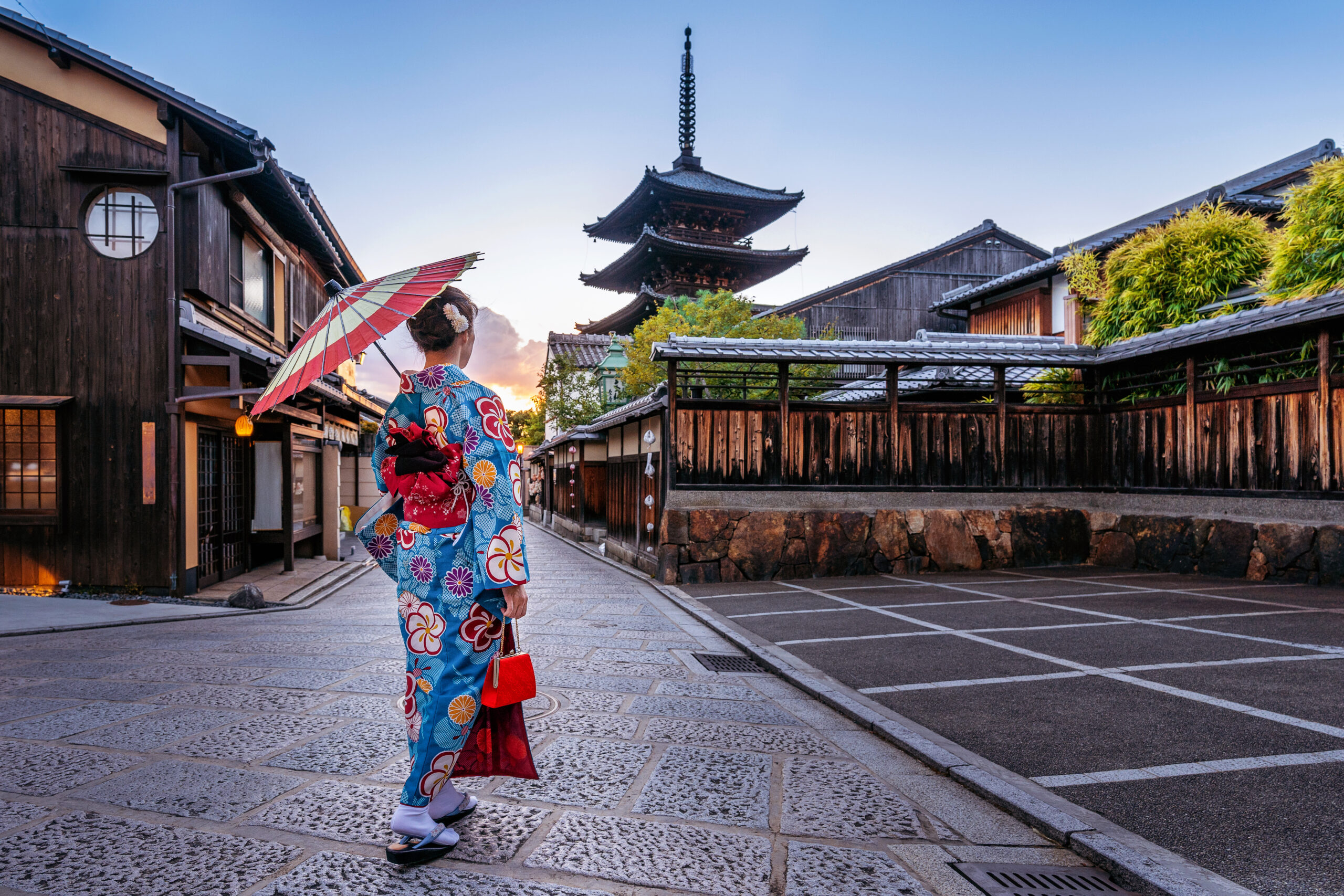
Fujiyoshida cancelled its cherry blossom festival. Mount Fuji’s hiking trail has a daily cap and a ¥4,000 fee. Kyoto is debating entry charges for over-touristed streets. Japan has hit a turning point — and its new 2026–2030 Tourism Basic Plan is the formal admission. The destinations that will define the next decade of Japanese travel are not the ones you already know.
In February 2026, a ten-year tradition ended. Fujiyoshida’s Arakurayama Sengen Park Cherry Blossom Festival — one of the most photographed events in Japan, the place where millions of travel feeds had been saturated with images of Mount Fuji framed by sakura and a five-storey pagoda — was cancelled. Not because of the rain or the budget. Because residents could no longer bear the consequences of the view, they lived next to it, becoming one of the most visited spots on earth.
“For Fujiyoshida City, Mount Fuji is not just a tourist attraction,” Mayor Shigeru Horiuchi said in his statement. “It is our very way of life. I feel a strong sense of crisis about the reality that, behind the beautiful scenery, the quiet lives, and the dignity of our residents, is being threatened.” The city cited traffic chronically jammed, cigarette butts strewn across residential streets, tourists trespassing into private gardens, and — in some cases — using those gardens as toilets when the crowds overwhelmed public facilities.
The cancellation of the Fujiyoshida festival is not an isolated incident. It is the most vivid data point in a crisis that Japan has spent the last several years managing, and finally, formally, admitted. On 27 March 2026, Japan’s Cabinet approved the Tourism Nation Promotion Basic Plan for 2026–2030 — a comprehensive five-year strategy that represents the country’s first explicit acknowledgement that the model which drove it to 42.7 million visitors in 2025 is not sustainable. The question for anyone who cares about Japan — as a traveller, as a host, or as both — is what comes next.
The Fujiyoshida crisis was, at its root, a social media phenomenon. One viral photograph — Mount Fuji, cherry blossoms, the Chureito Pagoda, clear sky — was shared across Instagram, TikTok, and travel forums until it became the defining image of what a “Japan trip” should contain. The town, a quiet residential community, was not prepared for what followed. Up to 10,000 visitors arrived per day during cherry blossom season, overwhelming local infrastructure designed for a fraction of that number.
The festival cancellation was not a ban on visiting. The park itself remains open, the mountain remains there, and the sakura bloom every spring, regardless. But Fujiyoshida’s decision signals something significant: that Japan’s communities are increasingly willing to sacrifice tourism revenue — and the global attention that comes with viral fame — in order to protect the basic conditions of daily life. That is a change in the social contract between Japan and its visitors that every traveler should understand.
The Concentration Problem: Why 73% of Visitors Go to the Same Five Places
Japan is not suffering from too many tourists. It is suffering from too many tourists in too few places, at too few times of the year. According to data from Japan’s Ministry of Land, Infrastructure, Transport and Tourism, cited by the World Economic Forum, approximately 73% of international overnight stays are concentrated in five prefectures: Tokyo, Osaka, Kyoto, Hokkaido, and Fukuoka. The remaining 42 prefectures share the other 27%.
The Golden Route — the well-worn circuit connecting Tokyo, Hakone, Kyoto, Nara, Osaka, and often Hiroshima — has defined how the world experiences Japan for a generation. It is a genuinely excellent itinerary. The destinations on it are world-class. The infrastructure connecting them is exceptional. But it is also a feedback loop: the places that are famous attract the content that makes them more famous, which attracts more visitors, which makes existing residents more uncomfortable, which eventually produces the kind of municipal decisions that Fujiyoshida made in February.
“Treating Tokyo and Kyoto as the entire country is like visiting New York and Los Angeles and saying you’ve seen America.”
Voyaige Japan Travel Guide, 2026 — widely circulated travel writing
The Cabinet-approved Tourism Basic Plan is the formal government acknowledgement that this concentration is both unsustainable for host communities and economically suboptimal for the country as a whole. The plan explicitly targets 130 million overnight stays in regional areas by 2030 — a number that implies a fundamental rebalancing of where Japan’s visitors sleep, eat, and spend. It also targets 40 million repeat visitors, on the understanding that people returning to Japan are far more likely to venture beyond the destinations they saw the first time.
Japan Tourism Basic Plan 2026–2030: Key Policy Measures
Tourist tax increase: Japan’s international departure tax rises from ¥1,000 to ¥3,000 per person from July 2026. Revenue will be directed to local governments implementing over-tourism management measures and regional tourism development.
Over-tourism zone expansion: The number of formally designated over-tourism management regions increases from 47 in 2025 to 100 by 2030. State subsidies will fund congestion management, visitor behaviour initiatives, and infrastructure improvements in these zones.
Dual pricing and demand management: The plan endorses differential pricing schemes — higher fees for foreign visitors at certain sites during peak periods — as a tool to manage demand and reflect the true cost of high-intensity tourism on local communities.
JTB Tourism HUB: A national data platform for full operation in 2026, giving local governments real-time access to visitor flow analytics, enabling evidence-based capacity management and targeted promotional campaigns for under-visited regions.
Regional dispersal target: JNTO is pivoting its international marketing toward the United States, Europe, and Australia to diversify the visitor base and specifically promote Hokkaido, Kyushu, Tohoku, and the Hokuriku coast as primary destinations.
The Thousand Views: Where Japan’s Next Chapter of Travel Begins
The question that follows from Japan’s policy shift is practical and philosophical: where, specifically, should the dispersed millions go? Japan has been asking this question publicly for several years, and the answer that tourism authorities, specialist operators, and independent travel writers are converging on is consistent: the country’s regional destinations are not consolation prizes for people who missed out on Kyoto. They are, in many cases, superior experiences.
Japan Beyond the Golden Route: Six Regions Ready for the Next Wave
Tohoku
Nature + culture
Kanazawa / Hokuriku
Craft + history
Kyushu
Food + volcanos
Setouchi
Art + islands
Hokkaido
Nature + skiing
Shikoku
Pilgrimage + onsen
The Economics of Going Somewhere No One Photographs
The argument for visiting Japan’s regional destinations has historically been framed in ethical terms: go somewhere less crowded and you relieve pressure on the places that are suffering. This is true — but it understates the case. The economic argument for slow, regional travel in Japan is now equally compelling, and increasingly well-evidenced.
Travellers who stay longer in a single region spend more locally — on accommodation, food, transport, experiences — than those cycling rapidly between major urban centres. The concentration of spending in five prefectures means that the yen spent in Kyoto and Tokyo often flowing to large hotel chains, international food brands, and intermediaries rather than to the local economies that need them most. A week in Kanazawa funds family-run ryokan, local craft workshops, neighbourhood izakaya, and regional transport infrastructure that would otherwise struggle to remain viable.
This logic is at the heart of Japan’s new tourism strategy. The plan’s emphasis on repeat visitors reflects an understanding that people coming to Japan for the second or third time are worth more than first-timers on the Golden Route — not because they spend more per day, but because they spend it in more places, and they are the source of the word-of-mouth that eventually draws others to those places too.
The Tools Being Deployed: From AI alerts to Tourist Taxes
Japan’s over-tourism response is not limited to destination promotion. The 2026 policy framework combines demand management, pricing mechanisms, data infrastructure, and behavioural nudges in a way that has few precedents in global tourism management.
The most visible tools are the fees and caps: the ¥4,000 climbing fee and 4,000-person daily limit on the Fuji Yoshida Trail, the impending ¥3,000 departure tax, the dual-pricing proposals that would allow popular sites to charge foreign visitors higher entry rates during peak periods. These are blunt instruments — effective at reducing volumes, but contested by some who argue that pricing out budget travellers reinforces access inequality in tourism.
More sophisticated is the technological layer. Japan expanded its AI-powered real-time crowd alert system in 2026, delivering live notifications to visitors via smartphone apps that flag congestion at specific sites and suggest alternatives. The JTB Tourism HUB data platform, entering full operation this year, gives prefectural tourism boards the analytics infrastructure to understand where visitors go, when, and for how long — and to adjust their promotional investments accordingly. A destination that shows consistent underutilisation of good infrastructure can use that data to make the case for targeted inbound marketing.
The combination of these tools represents, at the minimum, a more intelligent approach to visitor management than the previous strategy of essentially unlimited promotion with reactive crisis management. Whether it is sufficient to achieve the 2030 targets — or to reverse the trust deficit that Fujiyoshida’s cancelled festival represents — is a question that will be answered over the next four years.
What This Means for How You Travel in Japan in 2026
The policy shift matters for travellers in concrete, practical ways. Japan is not closing itself to visitors — it is redirecting them and increasingly using pricing and access controls to do so. Here is what the evidence suggests for anyone planning a trip:
When to Go
Avoid Golden Week (late April–early May) and the peak cherry blossom season in Kyoto and Tokyo. Tohoku blooms a full month later with almost no international crowds. Kyushu in June offers lush greenery, minimal visitors, and outstanding cuisine.
Where to Stay
Golden Route
Mount Fuji
Dwell Time
Key Takeaways
- The tourist departure tax triples to ¥3,000 from July 2026. Over-tourism management zones expand from 47 to 100. Dual pricing for foreign visitors at crowded sites is under active consideration.
- The six regional destinations worth primary attention — Tohoku, Kanazawa/Hokuriku, Kyushu, Setouchi, Hokkaido, and Shikoku — each offer experiences that rival or exceed the Golden Route in depth, with a fraction of the crowds.
- Repeat visitors are the policy target: 40 million of Japan’s 2030 goal of 60 million should be returning travellers, who are statistically far more likely to travel regionally and spend locally.
- For travellers, practical changes apply now: book Fuji trail permits in advance, use AI crowd alert apps, choose ryokan over chain hotels, add at least one regional destination to any Golden Route trip.
- The destinations that will define Japanese travel writing in 2030 are not Kyoto’s bamboo grove. They are places that most current visitors have never heard of — and that is precisely the point.
The Photograph That Nobody Will Take
The irony of the Fujiyoshida crisis is that a photograph created it. One image — reproduced millions of times across social media, held up as the definitive “Japan” image — drew enough visitors to make that image impossible to recreate with any dignity. The crowds that came to photograph the view became the thing that made the view unpleasant to be at. The content consumed the experience.
This is the core problem of modern mass tourism, and Japan’s response to it — a formal policy of dispersal, pricing, and managed access — is among the most serious attempts any country has made to address it. Whether it succeeds will depend on whether travellers actually respond to the incentives and disincentives being put in place, or whether the pull of the Instagram checklist proves stronger than the evidence that the checklist is now causing harm.
What Japan is offering in exchange — the thousand other views, the ryokan in the snow, the wanko soba challenge in Morioka, the sulfur springs of Beppu, the ferry crossing to Naoshima — is not a lesser substitute. It is, in most cases, closer to the Japan that travellers thought they were going to find: quieter, more local, less mediated. The country is not closing. It is redirecting. And the places it is pointing to are worth the reorientation.