
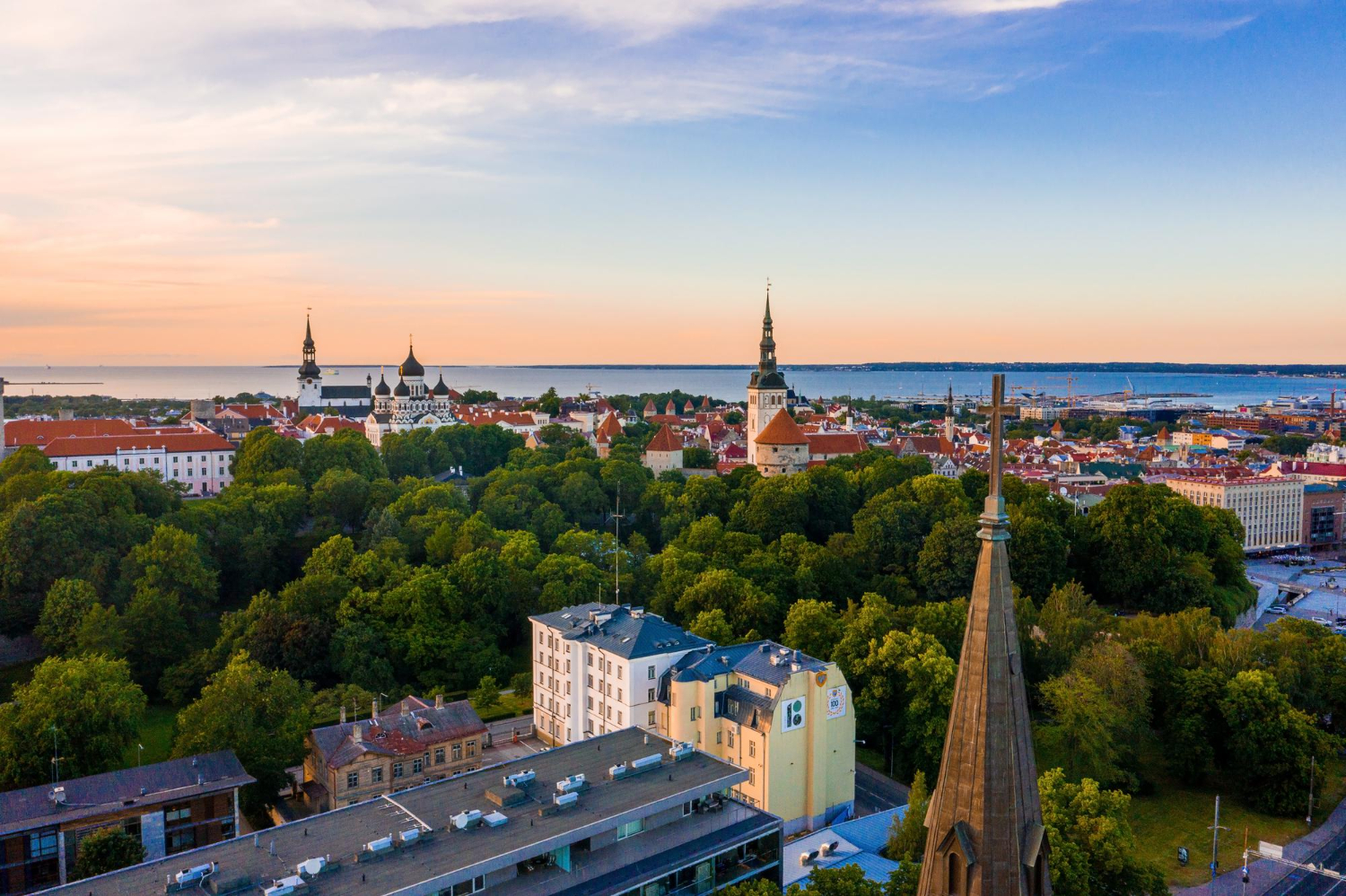
Spain recorded roughly 91.5 million international arrivals in the first eleven months of 2025 alone. Protests against tourism erupted across the Canary Islands and Mallorca. Venice expanded its tourist tax and visitor caps for the third consecutive year. By the time most travelers finished planning their 2026 trips, the destinations that used to define a perfect vacation had become, for a meaningful share of the people who actually went there, a lesson in queue management.
That breaking point has produced one of the most interesting shifts in travel behavior in years — not a retreat from travel itself, but a quiet, deliberate redirection toward what the industry started calling “destination dupes”: places that offer the same essential magic as an overrun icon, a short geographic shift away, with a fraction of the crowd and a noticeably better price. This is not a consolation prize for travelers priced out of the postcard version. For many, it has become the more interesting trip.
The Logic of the Dupe
The concept borrows its name, fittingly, from the beauty and fashion industry’s “dupe” culture — an affordable alternative that captures the essence of a luxury original. Applied to travel, the principle is straightforward: shift your perspective by 30, 60, or 300 kilometers, and look for the spots less traveled. The reward is not a lesser experience. It is frequently a more authentic one — stunning art cities without the velvet ropes, secluded mountain retreats instead of overbooked resort towns, sleepy islands that still feel like discoveries rather than checklist items.
The scale of the imbalance driving this shift is significant. Roughly 80% of global travelers currently flock to just 10% of destinations worldwide — a concentration so severe that industry analysts now describe over-tourism as an active threat to both the authenticity of the travel experience and the long-term sustainability of the places absorbing it. Croatia’s Dubrovnik, for context, hosts approximately 36 tourists for every single resident at peak season — a ratio that was already alarming before the post-pandemic “revenge travel” surge pushed global tourism past $11 trillion in annual value.
The travel advisory response to this imbalance has matured well beyond simply telling people to “go somewhere quieter.” Virtuoso’s 2026 Luxe Report identifies a clear and growing client preference for what it calls secondary destinations, paired with a parallel rise in demand for tour operators engaged in genuinely ethical, community-supporting initiatives, rather than performative sustainability branding. Shannon Stowell, CEO of the Adventure Travel Trade Association, frames the broader mood succinctly: 2026 travel “prioritizes well-being, simplicity, and regenerative depth” — curated, decision-free adventures in uncrowded destinations that blend nature, culture, wellness, and positive local impact, in place of excess.
Where the Smart Money Is Actually Going
Yamagata Prefecture, Japan: The Quiet 99%
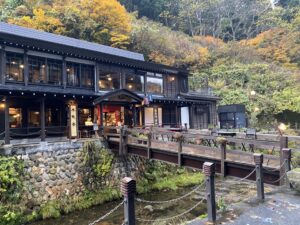
If any single destination captures the dupe logic at its most interesting, it is Yamagata, a largely rural prefecture roughly 200 miles north of Tokyo. National Geographic’s editors selected it for their 2026 Best of the World list specifically because, as some of Japan’s most famous destinations strain under over-tourism, not even one percent of Japan’s visitors experience Yamagata’s sacred mountains, tranquil temples, and onsen villages.
The region delivers, in concentrated form, everything that draws travelers to Japan. The Zao Onsen Ski Resort is home to the country’s famous “snow monsters” — Marie’s fir trees so heavily coated by icy wind-driven moisture that they take on the appearance of storybook creatures. Ginzan Onsen offers one of Japan’s most photogenic hot-spring towns; it’s the wooden ryokan buildings lining a narrow river gorge lit by gas lamps in the evening. The mountaintop Yamadera temple complex rewards the climb up its stone steps with sweeping valley views. And in the Dewa Sanzan mountains, travelers can join yamabushi mountain ascetic monks for waterfall meditation and mindfulness hikes — an experience that, in more visited parts of Japan, would likely require booking months in advance and sharing the moment with a tour group twenty deep.
Tbilisi and Svaneti, Georgia: The Soviet Past, Before Everyone Arrives
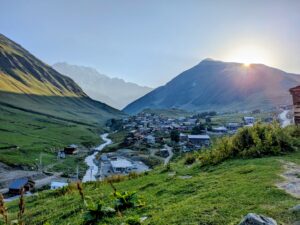
With new direct flights now connecting the UK and Tbilisi, 2026 is shaping up to be the year that Georgia moves from insider tip to mainstream itinerary — which makes this, by definition, the moment to go before that transition completes. Tbilisi’s old town offers sulfur bathhouses, a wine culture stretching back 8,000 years, and an architectural mix of Persian, Soviet, and Art Nouveau influences found almost nowhere else on a single street. Further north, the Svaneti region’s medieval stone defensive towers — UNESCO-protected and largely unchanged for centuries — sit beneath some of the Caucasus’s most dramatic peaks, accessible to hikers without the permit systems and crowd caps that now govern comparable alpine routes in Western Europe.
Tartu, Estonia: The Baltic City-Break Nobody’s Talking About Yet
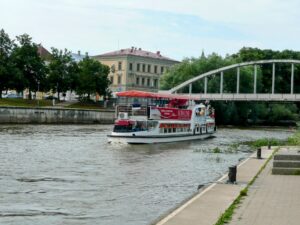
Tartu rarely appears on a typical “where to visit” list, which is precisely the point. Home to Estonia’s oldest university, the city carries a youthful, intellectual energy — street art, indie bookstores, and a cafe culture that punches well above its modest size. A walk through the compact old town takes an afternoon, but travelers who stay longer find cozy pubs and small galleries that provide a rewarding experience beyond ticking boxes. Year-round festivals celebrating literature, music, and film give the city a cultural calendar disproportionate to its population.
Yangon and the Mekong’s Quiet Corners, Southeast Asia

While Thailand absorbed more than 35 million visitors in 2024 and now contends with a heavily developed coastline — Maya Bay’s over-tourism collapse remains the cautionary case study the entire region cites — its neighbors tell a different story. The Philippines, despite world-class volcanic landscapes, white sand beaches, mountain ranges, and rice terraces, received only around 5.4 million international visitors in the same year. Cambodia’s Siem Reap, meanwhile, is in the midst of a genuine resurgence: airport expansions and improved road infrastructure have made Angkor Wat more accessible than ever, while floating villages on Tonlé Sap Lake and a flourishing local cafe scene give travelers reasons to stay well beyond the temple complex itself.
Basque Country and the Dolomites: The Overlooked Edges of Familiar Europe

Not every dupe requires an unfamiliar country. National Geographic’s 2026 list highlights Spain’s Basque Country as an interesting alternative to the Mediterranean’s most saturated coastlines — a region with its own distinct culinary identity, dramatic Atlantic coastline, and a cultural confidence that owes nothing to the crowds further south. Travelers heading to Italy for the 2026 Winter Olympics, primarily hosted in the Dolomites, should consider destinations like Lago di Braies in the Tyrol, which offers Alpine views similar to those in Switzerland or Austria but avoids the inflated prices typically seen in Olympic host locations.
How the Smartest Travelers Are Actually Planning These Trips
Choosing a less-crowded destination is only half of the 2026 travel recalibration. The other half is timing and pacing — and the advice converging from travel advisors and trend forecasters this year is remarkably consistent.
Off-peak scheduling has become a deliberate strategy rather than a budget compromise: coastal destinations in September or October, art cities in January or February, and outdoor adventure travel in May or June, shifting both price and crowd density in the traveler’s favor. Within a destination, the same logic applies at a smaller scale: the parallel street instead of the major thoroughfare, the minor museum instead of the headline collection, blue hour instead of high noon for the photograph everyone else is queuing for at midday.
There is also a broader generational shift toward unplugging entirely. Some travelers are deliberately swapping smartphones for low-tech flip phones and vintage cameras for the duration of a trip, while a notable resurgence in train travel reflects a similar instinct: despite the inconvenience of patchwork rail booking systems across some regions, more travelers are choosing the train specifically for the slower pace and the nostalgia it offers, often paired with genuinely elevated amenities — gourmet dining cars, glass-domed observation carriages, and tiered service levels that make the journey itself the destination, rather than a logistics problem to be minimized.
The Bigger Shift Behind the Trend
What makes 2026’s destination-dupe movement more than a passing travel-industry buzzword is the consistency of the underlying motivation across every example. Travelers are not simply chasing novelty. They are responding deliberately to the diminishing returns of over-tourism — the long queues, inflated prices, and strained local infrastructure that have turned several of the world’s most iconic destinations into cautionary tales rather than aspirational ones.
The destinations succeeding in this new landscape share a common thread: genuine cultural depth, meaningful local economic benefit, and an experience that rewards curiosity rather than simply rewarding a successful photograph. Yamagata’s onsen villages, Svaneti’s stone towers, Tartu’s intellectual energy, and Siem Reap’s floating villages all offer something that crowded landmarks increasingly cannot: room to actually notice where you are.
The travel industry will keep producing “best of” lists every January. But the more durable signal from 2026 is the redirection itself — a critical mass of travelers deciding that the most memorable trip is not necessarily the one with the most famous backdrop, but the one where there is still space to experience it properly.
Sources: National Geographic, “Best of the World 2026” (May 2026); The Wom Travel, “The Top Trending Destinations for 2026 to Travel Without the Crowds” (January 2026); Borderlines (Substack), “6 Alternative Travel Destinations for 2026” (January 2026); Voyagers Travel Network, “Top Travel Destinations for 2026: Sustainable Adventures” (December 2025); Reader’s Digest, “The 8 Biggest Travel Trends of 2026” (February 2026); Dutch Blogger on the Move, “Trending Travel Destinations 2026” (March 2026); UN World Tourism Organization, 2025 International Tourism Data; Virtuoso 2026 Luxe Report.