
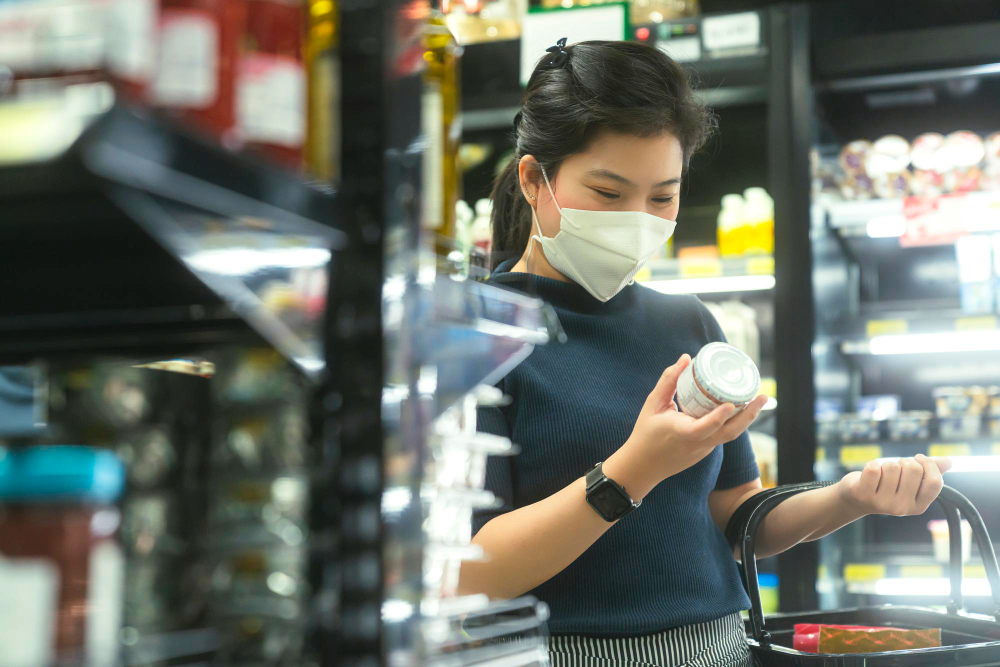
Japan pioneered the world’s first government-certified functional food programme in 1991. Three decades on, 35% of consumers are actively seeking gut-health foods, the market is racing toward $24.5 billion by 2034, and innovation is accelerating from fermented drinks to brain-function snacks. This is the story of how the country turned food into medicine and why the rest of the world is following.
- 1991: MHLW creates FOSHU — the world’s first government-certified functional food programme
- 2001: FOSHU expanded to cover capsules and tablets; FNFC (nutrient function claims) established
- 2015: FFC (Foods with Function Claims) launched — lower barrier, faster to market, year-on-year growth since
- 2026: Market at $14.6B, probiotic patent applications up 40% in five years, brain-health claims are the new frontier
- $24.5B Japan functional food market projected size by 2034 — 5.9% CAGR from $14.6B in 2025
- 35% of Japanese consumers actively seek foods and drinks that claim to improve gut health
- 80% of Japanese adults actively seeking products that enhance wellbeing — MHLW-referenced survey
- +40% rise in probiotic strain patent applications in Japan over the last five years, per the Intellectual Property Office
Stand in any Japanese convenience store — a Lawson, a FamilyMart, a 7-Eleven — and you are standing at the most sophisticated functional food distribution network on earth. The yogurt-chilled drinks are not just yogurt. The bright cans of green tea are not just tea. The crackers, the chocolates, the fermented beverages lined up along the back wall: dozens of them carry official government seals confirming that their health claims have been scientifically evaluated and approved. In Japan, you don’t need to visit a pharmacy to make a healthy choice. The convenience store is a pharmacy.
This did not happen by accident. It is the result of a thirty-five-year policy experiment that began when Japanese scientists proposed something radical: its nutritional content, but by its specific physiological function. Not “this milk contains calcium” — that is nutrition. But “this specific probiotic strain, at this specific dose, has been demonstrated to regulate intestinal conditions” — that is, function. The distinction sounds subtle. The regulatory and commercial architecture built on top of it is one of the most consequential in global food history.
How Japan Invented a New Category of Food
In the early 1980s, Japanese academic researchers working within Japan’s Ministry of Education, Science, and Culture proposed a new framework for thinking about what food does. They articulated three functions: primary (nutrition — the body’s physical substrate), secondary (sensory — taste, aroma, satisfaction), and tertiary (physiological — specific biological effects beyond basic nutrition). It was the third function that was new, and its implications were enormous.
If food could have verified physiological effects, then those effects could, in principle, be claimed on packaging and regulated. The Ministry of Health, Labour and Welfare took that logic and built a system around it. In 1991, FOSHU — Foods for Specified Health Use — became the world’s first government-administered certification programme for functional food health claims. A product seeking FOSHU status had to pass scientific evaluation by the Council of Pharmaceutical Affairs and Food Hygiene: rigorous, evidence-based, modelled on the standards applied to pharmaceutical claims rather than the more permissive self-certification common in many other markets.
The programme was not an overnight success. Gaining FOSHU approval was expensive and slow, closer to a drug approval process than a food labelling exercise. By January 2003, about 330 products had been approved. By 2011, that number had reached approximately 970. The system worked, but its strictness also constrained it. Smaller manufacturers could not afford the process. Innovation was slowed. And a growing gap emerged between what the science supported and what the regulatory pathway permitted.
FOSHU (Foods for Specified Health Use): The gold standard. Each product must undergo government scientific review and receive individual approval from the Consumer Affairs Agency (CAA) and MHLW. Health claims are specific and clinically substantiated. More than 70% of approved FOSHU products relate to digestive/gut health. Expensive and slow to obtain — typically used by major manufacturers.
FNFC (Foods with Nutrient Function Claims): Standardised claims for 20 vitamins, minerals, and fatty acids. No individual approval required — manufacturers self-certify compliance with established standards. Reliable but limited to specified nutrients only.
FFC (Foods with Function Claims): Introduced in 2015 — the game-changer. Manufacturers notify the CAA rather than applying for approval. The scientific substantiation can come from clinical trials, systematic reviews, or structured literature analysis. Much cheaper and faster than FOSHU. Has driven the explosion in functional food product launches since 2015. By fiscal year 2022, FFC shipment value reached approximately ¥441.8 billion — and climbing.
Yakult, Miso, and the science that changed what breakfast means
No category has driven Japan’s functional food market more than gut health. More than 70% of FOSHU-approved products relate to intestinal health — regulating conditions, promoting beneficial bacteria, and reducing absorption of fats and sugars. This is not a coincidence. It reflects a convergence of ancient Japanese dietary wisdom and emerging scientific evidence that, globally, has come to be called the gut-brain axis.
Japan has been fermenting food for centuries. Miso, natto, tsukemono pickles, amazake, nukazuke — these are not health foods in the modern marketing sense. They are daily staples, foods eaten without particular reflection as part of ordinary life. What the science of the last two decades has done is begin to explain why a country with these dietary habits also happens to have the longest healthy life expectancy on earth. The link is not proven in any single study. But the accumulation of evidence connecting a diverse, fermented-food-rich gut microbiome to immune function, metabolic health, inflammation regulation, and cognitive performance has become substantial enough to move from academic journals into product development pipelines.
“The gut microbiome is increasingly understood as a second brain — its diversity correlates with outcomes ranging from mood regulation to immune response. Japan, with its fermentation culture, had a head start that its food industry is only now fully capitalising on.”
IMARC Group — Japan Functional Food Market Report, 2025
Yakult Honsha is the most visible expression of this tradition. Founded in 1935 by microbiologist Minoru Shirota, who spent years developing a strain of lactic acid bacteria that could survive the journey through the human digestive tract, Yakult has spent nine decades turning a scientific observation into a global brand. Its small, sweet, distinctive bottles — each containing tens of billions of live Lactobacillus casei Shirota — are now sold in more than 40 countries. In Japan, they are a fixture of morning routines across every demographic.
But Yakult is now competing in a market far more crowded than the one its founder surveyed. In July 2025, the company expanded its supplement portfolio with high-CFU capsule formats specifically designed to support gut-immune health beyond traditional fermented beverages. In March 2026, it launched next-generation gut microbiome formulations targeting immunity and digestive health enhancement. Meiji Holdings — equally dominant in Japan’s dairy and functional food space — in May 2025, enhanced its probiotic powder supplements for elderly nutrition and digestive comfort. In November 2025, Nomura Dairy Products launched Japan’s first plant-based probiotic drink: a fermented carrot juice fortified with the LP299V strain, targeting vegan consumers seeking gut health benefits.
A Snapshot of Japan’s Functional Innovation Frontier — 2025-2026
Gut health
Yakult 1000: 100 billion Lactobacillus casei Shirota per bottle — targeting stress-induced gut disruption and sleep quality
Meiji LG21 Yogurt: Clinically validated L. gasseri OLL2716 strain — associated with reduced H. pylori activity and stomach lining protection
Brain/stress Morinaga Stress Strains
Cognitive
Otsuka Cognitive Nutrition: February 2026 — R&D focused on functional nutrition for cognitive health and stress management in ageing populations
Beauty from within
FANCL Clean Label Series: December 2025 trend — collagen, hyaluronic acid, and antioxidant supplements free from additives and preservatives
Plant-based gut
When Functional Foods Become a Public Health Crisis
For all its sophistication, Japan’s functional food system is not immune to failure — and 2024 produced the industry’s worst moment in decades. In March of that year, reports began to emerge of health problems linked to a dietary supplement manufactured by Kobayashi Pharmaceutical: a product containing beni koji, rice fermented with red yeast, which had been on sale as a cholesterol-management supplement for years. By the end of the crisis, five deaths and thousands of cases of kidney disease had been linked to the product. The cause was eventually identified as a contaminating compound — likely a mycotoxin — present in the fermentation process.
The Kobayashi Crisis and its Regulatory Aftermath
The Kobayashi Pharmaceutical beni koji incident was classified under the FFC system — the newer, lower-barrier notification framework introduced in 2015, rather than the more rigorous FOSHU approval track. The contamination was not a failure of the clinical evidence behind red yeast rice (which does have well-documented cholesterol effects) but of manufacturing quality control and post-market surveillance.
Research published in the journal Foods in April 2025 — analysing Japan’s regulatory history from the 1960s to the present — concluded that the incident highlighted a key tension in the co-evolution of markets and regulation: as the FFC system successfully lowered barriers to innovation, it also reduced the scrutiny applied to individual products before they reached consumers. The MHLW and Consumer Affairs Agency have since tightened post-market monitoring requirements and manufacturer reporting obligations under FFC. The balance between innovation and consumer safety remains one of the defining tensions of Japan’s functional food model.
How Japan’s Playbook is Spreading and What Other Countries Haven’t yet Copied
Japan’s functional food model has influenced regulatory frameworks on every continent. The European Union’s health claim system, South Korea’s functional health food regulation, Singapore’s permitted claims list, and Taiwan’s health food control act all draw, in varying degrees, on the logic that Japan pioneered: that food health claims can be scientifically substantiated and officially certified, rather than simply asserted in advertising copy.
But the feature of Japan’s system that most countries have not replicated — and that may be the most important — is the depth of consumer literacy it has generated. Japanese shoppers, over thirty-five years, have been educated by their government, their food industry, and their own cultural emphasis on preventive health to understand the difference between a product that contains probiotics and one that has been certified to deliver a specific probiotic effect at a specific dose. That distinction — which seems obvious once you understand it — is largely invisible to consumers in most other markets. In Europe and the United States, “probiotic” remains largely a marketing word. In Japan, it is a technical category with regulatory consequences.
The result is a virtuous cycle. Japanese manufacturers invest heavily in clinical research because the regulatory system rewards evidence, and consumers pay attention because decades of certification labelling have taught them to. Yakult funds peer-reviewed research. Meiji publishes trial results. Morinaga submits clinically validated strain data. The science and commercial incentives point in the same direction — a configuration that remains unusual in the global food industry.
Beyond the Gut: Brain Health, Sleep, and the Personalised Food Future
The gut health wave has not crested — it is accelerating, as new research links the gut microbiome to conditions far removed from digestion. But Japan’s functional food industry is already looking at the next territory: cognitive function, sleep quality, and mental wellness. Morinaga’s June 2025 launch of probiotic strains specifically targeting stress-related gut disorders and sleep quality improvement is an early signal. Otsuka Pharmaceutical’s February 2026 R&D focus on cognitive health supplements for ageing populations is another.
The consumer appetite exists. Research from 2026 tracking Japanese consumer behaviour confirms that wellness — particularly stress relief, mental health, and everyday comfort — is now a major driver of food and supplement purchasing across age groups. People are shifting, researchers note, from “more” to “better”: fewer, higher-quality products that support a calmer, healthier life. Functional foods, at their best, sit exactly at this intersection.
The horizon beyond that is personalised nutrition — products and supplement regimens tailored not to broad population health goals but to individual microbiome profiles, genetic markers, and lifestyle data. A 2026 report from the Japan Health and Nutrition Food Association found that 45% of Japanese consumers expressed interest in personalised nutrition solutions. The infrastructure for this — the clinical data accumulated through decades of FOSHU and FFC certification, the consumer trust built through consistent evidence-based labelling, the manufacturing expertise of companies like Yakult and Meiji — exists in Japan to a degree that it exists nowhere else.
Key Takeaways
- Japan invented the functional food category in the 1980s and built FOSHU — the world’s first government-certified functional food programme — in 1991. This 35-year head start explains the depth and sophistication of today’s market.
- Three certification tiers now operate: FOSHU (rigorous, individually approved), FNFC (standardised nutrients, self-certified), and FFC (notification-based, enabling rapid innovation since 2015). Each serves a different point on the innovation-safety spectrum.
- Gut health accounts for more than 70% of FOSHU-approved products. Japan’s fermented food culture — miso, natto, tsukemono — gave it a scientific and cultural head start that its food industry is now fully monetising.
- Yakult, Meiji, Morinaga, and FANCL are all expanding beyond traditional categories into brain health, sleep quality, and “beauty from within” in 2025-2026 — the next functional frontiers.
- The 2024 Kobayashi Pharmaceutical beni koji crisis exposed genuine tensions in the FFC framework’s lighter-touch oversight. Post-market surveillance requirements have since been tightened.
- Japan’s functional food model is globally influential, but its most distinctive feature — deep consumer literacy about certified health claims — has not been replicated elsewhere.
- The $14.6 billion market is heading toward $24.5 billion by 2034. Probiotic patent applications are up 40% in five years. The convenience store as pharmacy is not a metaphor: it is Japan’s national health strategy.
What the Rest of the World Can Learn from a Small Bottle of Yakult
The global healthcare systems facing the greatest fiscal pressure in 2026 are those built entirely around treating disease after it has occurred. Japan is not immune to this pressure — its ageing population and universal coverage create their own cost challenges. But Japan has been quietly building a parallel infrastructure for decades: a food system designed to prevent people from getting sick in the first place, underwritten by scientific evidence and accessible through the most ubiquitous retail network in the country.
That infrastructure is the convenience store — 56,000 of them across Japan, open around the clock, stocked with products that have been evaluated by government scientists and carry certified health claims. It is the daily Yakult, the Meiji probiotic yogurt, the FFC-labelled collagen drink from a brand most people outside Japan have never heard of. It is thirty-five years of consumer education that has produced a country where 80% of adults actively seek products that enhance their wellbeing, and where a significant portion of that seeking happens not in a pharmacy, but in a chilled aisle between the rice balls and the canned coffee.
The lesson is not that every country should replicate Japan’s regulatory architecture exactly — the FFC crisis of 2024 shows that the architecture has real vulnerabilities. The lesson is that the underlying logic — that food’s effect on health is scientifically knowable, certifiable, and commercially viable — is one that countries ignoring it will eventually have to learn. Japan learned it forty years ago. The rest of the world is catching up, one probiotic at a time.